
Your Garage Door Is the Largest Moving Part of Your Home
Think about this: your garage door opens and closes roughly 1,500 times per year. That's a lot of wear and tear on springs, cables, rollers, hinges, and the opener. Yet most homeowners in Fair Oaks and the surrounding Sacramento area never give their garage door a second thought — until it stops working at the worst possible moment.
Regular garage door maintenance isn't just about preventing breakdowns. It's about safety, security, and extending the life of a system that costs thousands of dollars to replace. In this post, we'll break down how often you should service your garage door, what a proper maintenance visit includes, and the simple things you can do between professional tune-ups to keep everything running smoothly.
How Often Should You Schedule Professional Maintenance?
The short answer: at least once a year. For most residential garage doors in Fair Oaks, an annual professional inspection and tune-up is sufficient to catch problems early and keep the system operating safely.
However, there are situations where you might want to schedule service more frequently:
- Heavy use: If your household uses the garage door four or more times per day, consider scheduling maintenance every six months.
- Older doors: Garage doors that are 10 years old or more benefit from twice-yearly inspections since components are more likely to wear out.
- Extreme weather exposure: Here in the Sacramento region, our hot summers can take a toll on weatherstripping, lubricants, and rubber components. A mid-year check after summer can catch heat-related wear.
- Commercial properties: Businesses with high-traffic garage doors should schedule quarterly maintenance to avoid costly downtime.
What Does a Professional Garage Door Tune-Up Include?
A thorough garage door maintenance visit goes far beyond just spraying some lubricant on the tracks. Here's what a qualified technician should inspect and service during a professional tune-up:
1. Spring Inspection and Adjustment
Your garage door springs bear the full weight of the door and are under tremendous tension. A technician will check for signs of wear, rust, or elongation and adjust the tension if the door isn't balanced properly. Properly maintained springs last longer and reduce strain on your opener.
2. Cable and Hardware Inspection
Frayed cables, loose brackets, and worn hinges are common issues that develop gradually. During a maintenance visit, every piece of hardware is inspected and tightened. Catching a fraying cable early can prevent a dangerous snap later.
3. Roller and Track Service
Rollers wear down over time, especially nylon rollers that can crack and steel rollers that can develop flat spots. The tracks are checked for alignment, dents, and debris. Misaligned tracks are one of the most common causes of a noisy or jerky garage door.
4. Lubrication
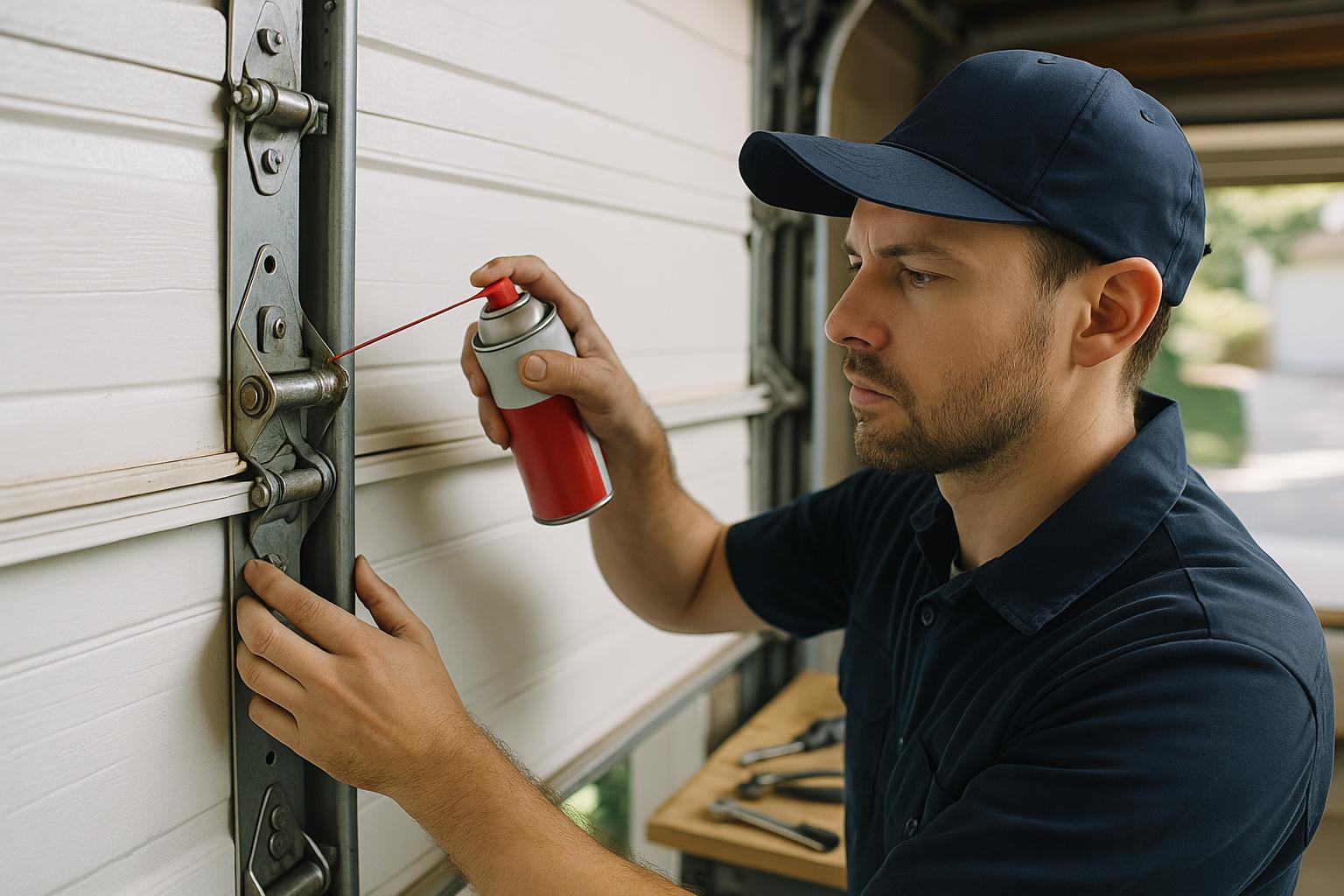
All moving parts — springs, rollers, hinges, and the opener chain or screw — are lubricated with a garage-door-specific lubricant. This reduces friction, quiets operation, and prevents premature wear. If your garage door has been getting louder lately, lack of lubrication is often the culprit.
5. Opener Safety Tests
Your garage door opener has two critical safety features mandated by federal law: the auto-reverse mechanism and the photo-eye sensors. A technician will test both to make sure they're functioning correctly. These features prevent the door from closing on a person, pet, or object, so keeping them in working order is essential.
6. Weatherstripping Check
The rubber seal along the bottom of your door and the weatherstripping around the frame keep out rain, dust, insects, and rodents. Over time, these seals crack and deteriorate. Replacing worn weatherstripping is an inexpensive way to improve energy efficiency and protect everything stored in your garage.
7. Balance Test
A balanced garage door should stay in place when lifted halfway and released manually. If it slides up or crashes down, the springs need adjustment. An unbalanced door forces the opener to work harder, which shortens its lifespan significantly.
What You Can Do Between Professional Visits
You don't need to be a technician to keep an eye on your garage door between annual service appointments. Here are some simple things Fair Oaks homeowners can do monthly or seasonally:
- Visual inspection: Look at the springs, cables, rollers, and hardware for obvious signs of wear, rust, or damage. Never attempt to adjust springs yourself — they're under extreme tension and can cause serious injury.
- Listen for changes: A garage door that suddenly sounds different — grinding, scraping, squealing, or banging — is telling you something is wrong.
- Test the balance: Disconnect the opener by pulling the release handle, then manually lift the door halfway. If it doesn't stay put, call a professional.
- Test the auto-reverse: Place a roll of paper towels on the ground in the door's path and press the close button. The door should reverse immediately upon contact. If it doesn't, stop using the door and call for service.
- Clean the tracks: Wipe down the inside of the tracks with a damp cloth to remove dirt and debris. Don't use lubricant on the tracks themselves — it can cause the door to slide unevenly.
- Keep the photo-eye sensors clean: Dust, cobwebs, and dirt on the sensor lenses can cause your door to refuse to close. A quick wipe with a soft cloth solves the problem.
The Cost of Skipping Maintenance
We understand that scheduling maintenance for something that seems to be working fine can feel unnecessary. But consider the math. A professional tune-up is a modest investment. A broken spring replacement costs significantly more. A full opener replacement costs even more than that. And a complete garage door replacement — which can become necessary when years of neglect cause cascading damage — can run into the thousands.
Beyond the financial argument, there's the safety factor. A garage door weighs between 150 and 400 pounds. A failing spring, snapped cable, or malfunctioning safety sensor turns that weight into a serious hazard for your family.
When to Call for Service Between Tune-Ups
Even with regular maintenance, issues can arise unexpectedly. Contact a garage door professional right away if you notice any of the following:
- The door won't open or close completely
- You hear a loud bang from the garage (likely a broken spring)
- The door is visibly crooked or off-track
- The opener runs but the door doesn't move
- The door closes too fast or slams shut
These situations can be dangerous, and attempting a DIY fix on a garage door under tension is never recommended.
Keep Your Garage Door in Top Shape Year-Round
Your garage door works hard every single day. A little preventive care goes a long way toward keeping it safe, quiet, and reliable for years to come. If it's been more than a year since your last professional service — or if you can't remember the last time it was serviced at all — now is the time to schedule a tune-up.
At Fair Oaks Garage Door Specialists, we provide thorough maintenance services to homeowners across Fair Oaks, Citrus Heights, Orangevale, Carmichael, Rancho Cordova, and Folsom. Our technicians inspect every component, address small problems before they become big ones, and make sure your door is operating safely and efficiently. Give us a call today to schedule your annual garage door tune-up.