
That Frustrating Reverse: What's Really Going On
You press the button on your garage door remote, watch the door glide downward, and then — just before it touches the floor — it stops and reverses right back up. You try again. Same thing. Maybe you try holding the wall button down, and it finally closes, but the moment you let go, up it goes again.
This is one of the most common garage door complaints we hear from homeowners in Fair Oaks, and the good news is that it's almost always fixable. The bad news is that ignoring it can leave your garage wide open to weather, pests, and security risks. Let's walk through the most likely causes and what you can do about each one.
Understanding Your Garage Door's Safety System
Before we get into troubleshooting, it helps to understand why your garage door is designed to reverse in the first place. Every garage door opener manufactured after 1993 is required by federal law to include two safety mechanisms:
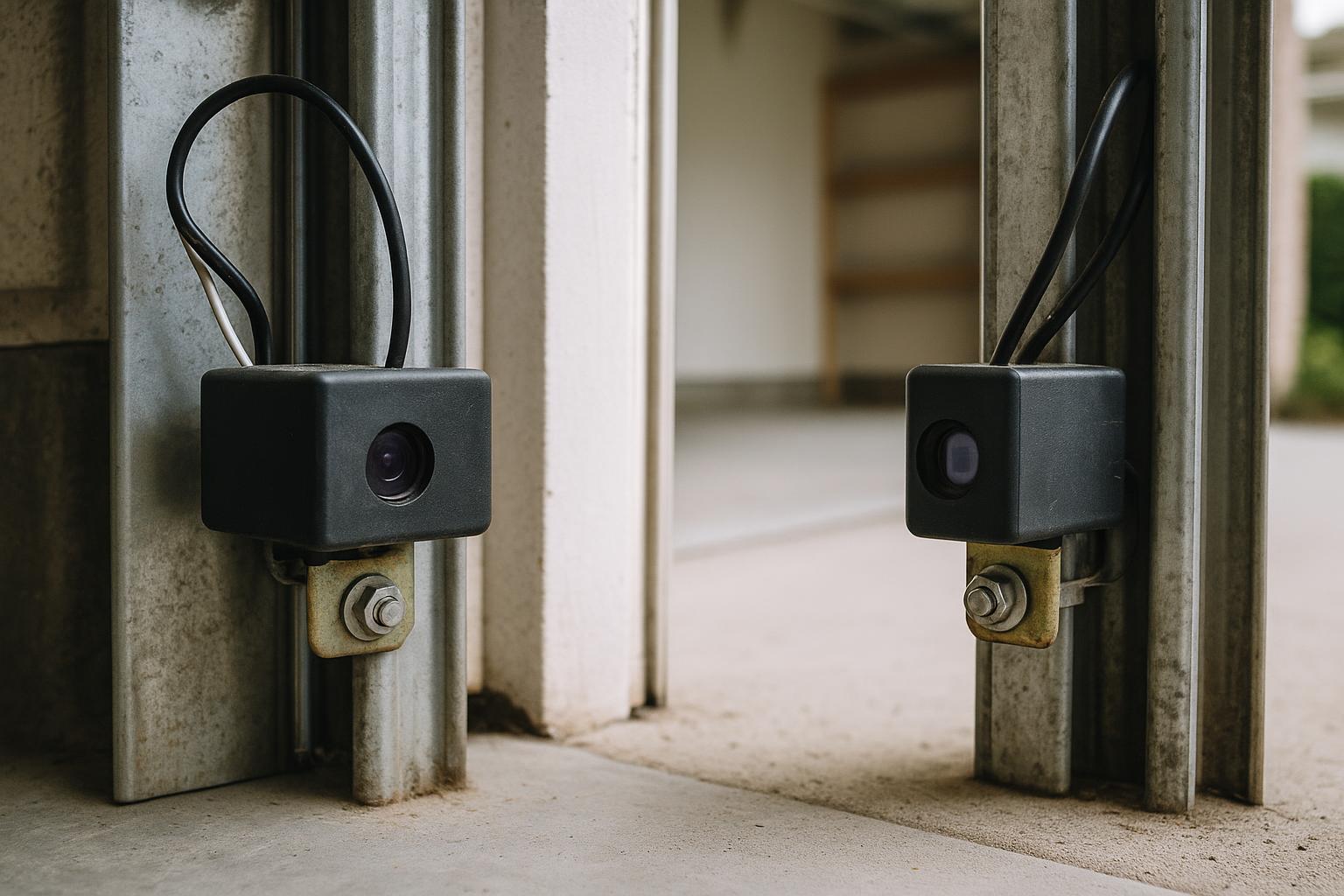
- Photo-eye sensors: Two small sensors mounted near the bottom of your garage door tracks that send an invisible beam across the opening. If something breaks that beam, the door reverses.
- Auto-reverse mechanism: If the door encounters physical resistance while closing — like hitting an object or the floor too hard — it reverses direction.
Both of these features exist to prevent injuries and property damage. So when your door reverses unexpectedly, it's usually because one of these safety systems thinks something is wrong, even when nothing is actually in the way.
Cause #1: Misaligned Photo-Eye Sensors
This is the number one reason garage doors reverse before closing, and it's the first thing we check on service calls throughout the Fair Oaks and Citrus Heights area. The photo-eye sensors on either side of your garage door opening need to be perfectly aligned to maintain their infrared beam. If one gets bumped — by a bike, a trash can, a kid's scooter — the beam breaks and the door thinks there's an obstruction.
What to look for:
- Check both sensors for a steady LED light. Most models show a green light on the receiving sensor and an amber or green light on the sending sensor.
- If one light is blinking or off, that sensor is likely misaligned or malfunctioning.
- Look for obvious obstructions like cobwebs, dirt, or leaves covering the sensor lens.
What you can try:
Gently wipe both sensor lenses with a soft cloth. Then check that both sensors are pointed directly at each other. You can sometimes adjust them by loosening the wing nut or bracket and carefully repositioning the sensor until the LED becomes steady. If the lights still won't stay solid, the wiring or the sensor itself may need replacement.
Cause #2: Incorrect Close-Limit Settings
Your garage door opener has adjustable settings that tell it how far the door should travel before it considers itself fully closed. If the close-limit setting is off — even by a small amount — the opener may think the door is hitting an obstruction when it's actually just reaching the floor. The opener interprets that resistance as a safety issue and reverses.
What to look for:
- The door gets very close to the floor but reverses at the last inch or two.
- The door closes completely but then immediately reopens.
What you can try:
Most openers have limit adjustment screws on the back or side of the motor unit, typically labeled "open" and "close." Turning the close-limit screw in small increments can solve the problem. However, adjusting these settings incorrectly can cause the door to press too hard against the floor, which defeats the safety mechanism. If you're not confident in making this adjustment, it's worth calling a professional.
Cause #3: Worn or Damaged Tracks and Rollers
Over time, the metal tracks that guide your garage door can develop bends, rust, or debris buildup. Rollers can wear out, crack, or lose their bearings. When the door encounters extra friction from any of these issues, the opener's auto-reverse may kick in because it senses more resistance than expected.
Fair Oaks homeowners with older garage doors are especially prone to this issue. The temperature swings we get in the Sacramento region — hot summers and cool, damp winters — can accelerate wear on metal components and dry out lubrication faster than you might expect.
What to look for:
- Visible dents or bends in the tracks
- Rollers that appear cracked, chipped, or don't spin freely
- Grinding or scraping noises during door operation
What you can try:
You can clean the tracks with a damp cloth and apply a silicone-based garage door lubricant to the rollers, hinges, and tracks. Avoid using WD-40, which is a solvent and not a long-term lubricant. If rollers are visibly damaged, they should be replaced — and bottom bracket rollers should always be handled by a professional due to the spring tension involved.
Cause #4: Problems with the Garage Door Springs
Your garage door springs do the heavy lifting — literally. They counterbalance the weight of the door so the opener doesn't have to work as hard. When a spring is weakening, broken, or improperly balanced, the door becomes heavier than the opener expects. This extra weight can trigger the auto-reverse.
What to look for:
- The door feels unusually heavy when you try to lift it manually
- The door opens unevenly or appears crooked
- You heard a loud bang from the garage (a sign of a spring breaking)
Important: Garage door springs are under extreme tension and are genuinely dangerous to work on without proper training and tools. Spring adjustment and replacement should always be left to experienced technicians. This is not a DIY project.
Cause #5: Wiring Issues
Less common but still worth mentioning — damaged or frayed wiring between the opener and the sensors can cause intermittent reversing problems. Rodents, staples that pierced the wire during installation, or simple age can all compromise the wiring. If you've checked everything else and the problem persists, a wiring inspection is the logical next step.
When to Call a Professional
Some of these fixes are straightforward enough for a handy homeowner to tackle on a Saturday afternoon. But if you've cleaned the sensors, checked the alignment, and the door still won't stay closed, it's time to bring in help. Continuing to force a malfunctioning garage door to operate can cause further damage to the opener, tracks, or door panels — turning a minor repair into a major expense.
At Fair Oaks Garage Door Specialists, we diagnose reversing issues quickly because we've seen hundreds of them. We serve homeowners throughout Fair Oaks, Orangevale, Carmichael, Rancho Cordova, and Folsom, and we carry the parts needed for most repairs on our service vehicles so we can resolve the problem in a single visit.
Keep Your Door Running Smoothly
The best way to avoid unexpected garage door problems is regular maintenance. An annual tune-up that includes sensor alignment checks, lubrication, spring inspection, and track cleaning can catch small issues before they turn into the kind of problem that leaves your garage stuck open on a rainy evening. If your garage door has been giving you trouble — or if it's been a while since anyone took a close look at it — give us a call. We're happy to help you get things back on track.